
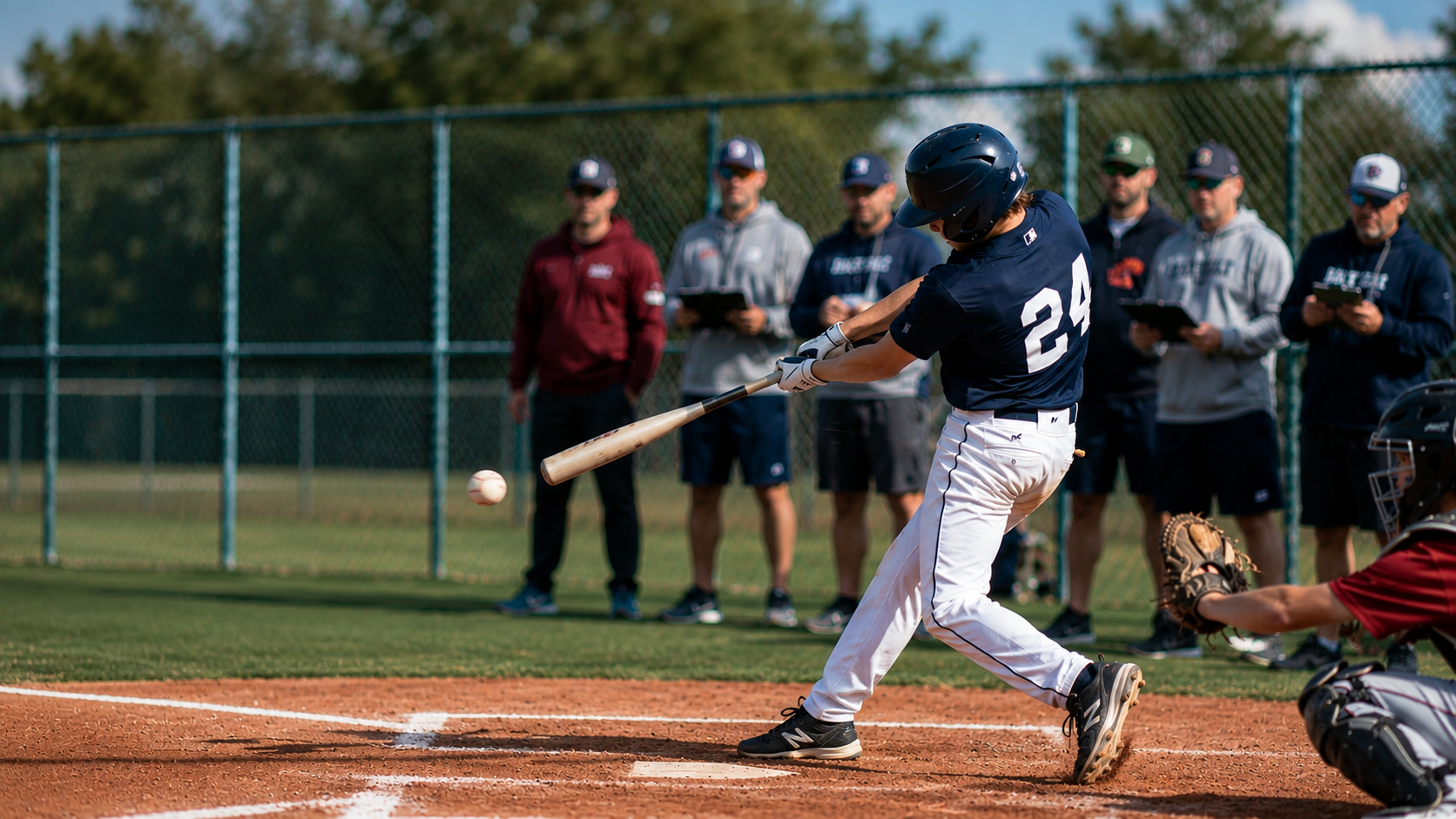
Many travel baseball organizations rely heavily on tryouts to build their rosters. While tryouts can provide useful information, they are not always the best way to fully evaluate a player’s true ability, potential, or long-term value to a team. In many cases, a short tryout session only captures a small snapshot of a player rather than the complete picture.
Limited Time Creates Limited Evaluations
One of the biggest challenges with tryouts is the limited amount of time coaches have to evaluate players. Most tryouts last only a few hours, and some players may only get a handful of swings, a few ground balls, or a short bullpen session.
Baseball is a sport built around consistency over time, not quick moments. A player can have a great day at a tryout and struggle during the season, while another player may have a poor tryout but become one of the most dependable players on the roster.
Pressure Impacts Performance
Pressure also plays a major role. Many young athletes become nervous during tryouts because they know roster spots are on the line. Some players naturally perform better in game situations than they do in isolated drills.
Others may struggle with anxiety, timing, or confidence during evaluations even though they possess strong baseball instincts and competitive ability. A player who appears average during a tryout may completely change once real games begin.
Tools Do Not Tell the Entire Story
Another issue is that tryouts often focus too heavily on measurable tools. Coaches may prioritize arm strength, exit velocity, running speed, or size. While those things are important, they do not always determine who will become the best baseball player.
Baseball IQ, work ethic, attitude, toughness, coachability, and love for the game are much harder to evaluate in a two-hour workout. These traits often separate successful players from talented players over the long run.
Game Performance Matters
Game performance should carry significant weight in evaluations. Some players are simply “gamers.” They compete harder when the lights turn on, make smart decisions under pressure, and consistently help teams win.
These qualities are difficult to measure during standard tryout drills. Watching players during league games, tournament play, practices, or even multiple training sessions can provide a much more accurate evaluation.
A Player’s History Is Important
Coaches should also consider a player’s past history and body of work. Looking up statistics on platforms like GameChanger can provide insight into consistency, pitching usage, hitting trends, and overall production over time.
Speaking with coaches, trainers, or even parents can also help paint a clearer picture of the player’s skills, attitude, work ethic, leadership, and commitment to development. A short tryout may show physical tools, but a player’s history often reveals who they truly are over the course of a season.
Development Is Not Always Linear
Travel baseball families should also understand that development is not always linear. Players improve at different rates. A player who struggles one season may make major improvements the next year through hard work, training, and confidence.
Good organizations recognize potential and development, not just current performance.
Tryouts Should Be Part of the Process — Not the Entire Process
This does not mean tryouts are useless. They can absolutely help coaches identify talent, athleticism, and certain baseball skills. However, tryouts should be viewed as just one piece of the evaluation process — not the entire process.
The best travel baseball programs combine tryout performance with game evaluation, practice habits, attitude, effort, past history, and long-term development potential.
At the end of the day, baseball is a marathon, not a sprint. A single tryout should never fully define a young player’s future in the game.