
For many baseball families, one of the biggest decisions comes long before high school tryouts or college recruiting. It starts with a simple question: Is my child ready for travel baseball? Every year, parents watch teammates move from recreational leagues to travel organizations and wonder whether their own child should make the same transition. Some worry about moving too early, while others worry about waiting too long.
The truth is there is no universal answer. Every player develops at a different pace physically, mentally and emotionally. Some children are prepared for travel baseball at eight years old, while others benefit from another year or two of recreational baseball before making the jump. The key is making an honest assessment of your child’s skills, maturity and passion for the game rather than comparing them to other players.
Although every situation is unique, there are several common indicators that can help parents determine whether travel baseball is the right next step.
Sooner Is Usually Better
One of the biggest misconceptions about travel baseball is that families should wait until middle school before joining a travel team. While late starters certainly find success, many experienced coaches believe that if a child has the necessary skills and desire to play, beginning earlier provides significant developmental advantages.
Generally speaking, 8U is the earliest age to seriously consider travel baseball. At that age, most children have developed enough coordination and understanding of the game to benefit from more advanced coaching and increased competition. While some organizations offer developmental teams before then, eight years old is often when travel baseball begins to resemble organized competitive baseball.
Parents also should avoid waiting too long if their child is clearly ready. By the time players reach 11U or 12U, many travel athletes have already accumulated several seasons of higher-level coaching, tournament experience and offseason training. Those additional repetitions create noticeable differences in skill development. That does not mean a player who starts later cannot become successful, but the learning curve often becomes steeper as the competition improves.
Every Child Develops at a Different Pace
Although starting earlier can be beneficial, parents should remember that no two players develop on the same timeline. Some children naturally mature faster, while others experience dramatic improvement over a single offseason. Growth spurts, coordination, confidence and athletic ability all develop differently from player to player.
Parents should resist comparing their child to teammates, classmates or siblings. One player’s journey has very little to do with another’s. The goal is not simply to join a travel team because everyone else is doing it. Instead, the goal is finding the right opportunity at the right time so your child can continue improving while enjoying the game.
Making the transition before a player is ready can sometimes create frustration and hurt confidence. Waiting until a child has developed the necessary fundamentals often leads to a much more positive experience.
Get an Honest Opinion From Someone Who Isn’t a Parent
Parents naturally want the best for their children, but that emotional connection can make objective evaluations difficult. Some parents underestimate their child’s ability because they focus on mistakes. Others unintentionally overestimate their child’s readiness because they see improvement every day.
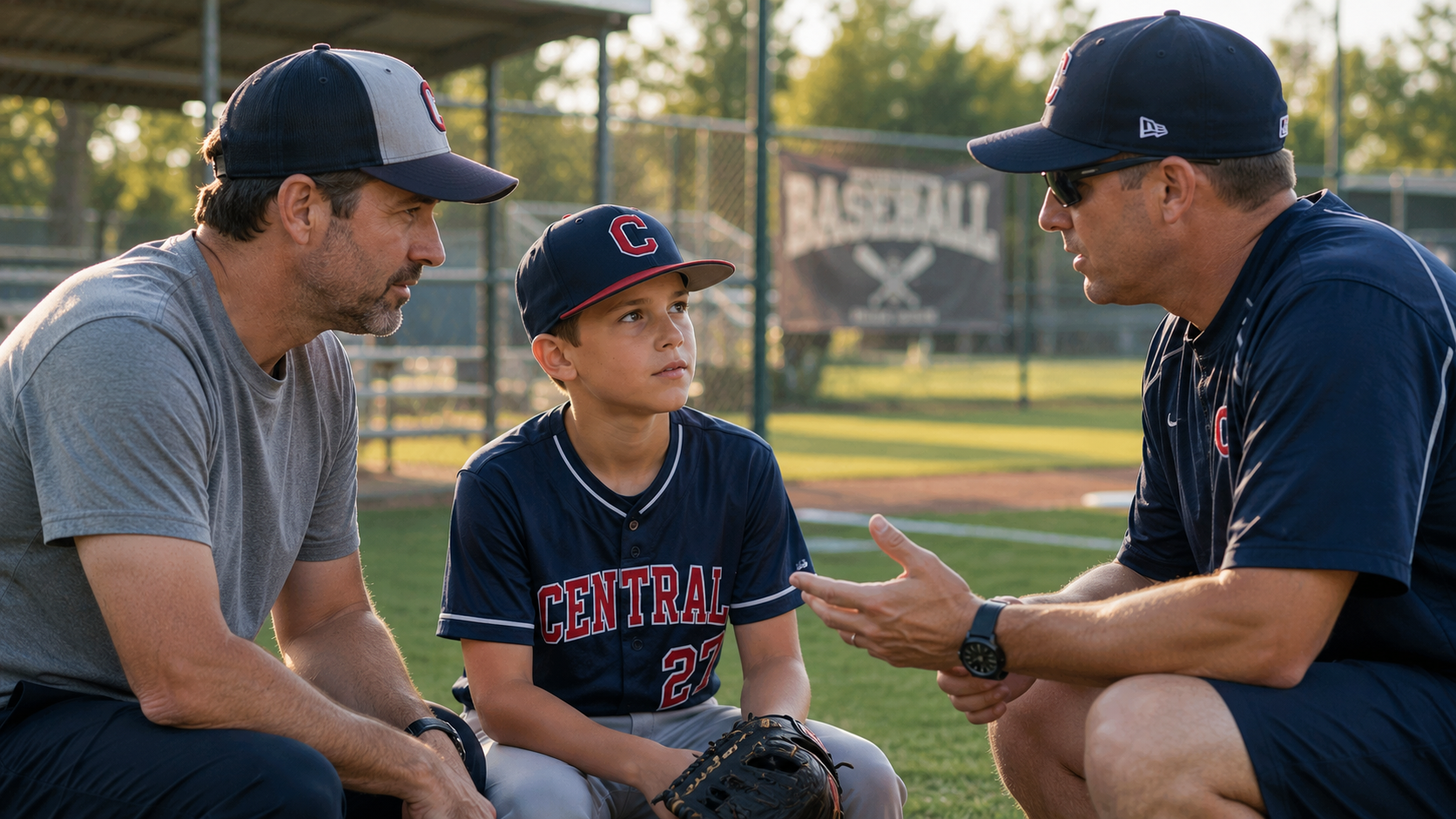
One of the smartest things a family can do is ask a knowledgeable baseball coach who has no personal relationship with the player for an honest evaluation. This could be a recreation coach, travel coach, private instructor, former college player or high school coach. Make it clear that you are looking for an honest assessment rather than encouragement.
Ask questions such as whether your child is ready today, what specific skills still need improvement and what areas should become priorities over the next year. Experienced coaches evaluate hundreds of players every season and can usually identify whether a player is prepared for travel baseball much more objectively than parents can.
Does Your Child Have Strong Baseball Fundamentals?
Travel baseball is not about having one exceptional skill. Instead, coaches look for players who perform the basic fundamentals consistently. Young players do not need to be perfect, but they should demonstrate reliable mechanics and confidence in the core areas of the game.
Players who consistently throw, catch, field and hit routine baseballs are much more likely to succeed than players who occasionally make spectacular plays but struggle with the fundamentals. Coaches know they can continue teaching advanced techniques, but they expect players to arrive with a solid foundation already in place.
If your child is still struggling with routine throws, frequently missing ground balls or rarely making contact at the plate, another season focused on fundamentals may provide tremendous long-term benefits.
Self-Assess Your Child’s Defensive Skills
Parents often ask for measurable ways to evaluate readiness. While no evaluation system is perfect, consistency is usually the best indicator of preparedness. A player who performs routine plays over and over again is generally more prepared for travel baseball than one who occasionally makes difficult plays but struggles with basic ones.
Fielding
One simple way to evaluate fielding is asking whether your child cleanly fields eight out of every ten routine ground balls. A successful fielding attempt means the ball enters the glove cleanly without bouncing off the glove or popping back out. The player should also maintain control of the baseball while preparing to make the throw.
Children who consistently field routine ground balls usually demonstrate good hand-eye coordination, proper glove position and developing footwork. While difficult hops and hard-hit balls will challenge every player, routine ground balls should become routine outs.
Catching
Receiving throws is another important skill that often separates recreation players from travel players. Ask yourself whether your child catches eight out of every ten routine throws without dropping the baseball or needing multiple attempts to secure it.
Travel coaches understand that occasional drops happen. However, players who routinely catch baseballs cleanly show they are developing the confidence and coordination necessary to compete at a higher level. Good receiving skills also help teammates become more successful because accurate throws are rewarded with completed outs.
Throwing
Throwing accuracy is often more important than arm strength at younger ages. Rather than asking how hard your child throws, evaluate how often throws arrive on target. A good benchmark is making an accurate throw eight out of every ten attempts.
An accurate throw should reach the receiving player without forcing them to jump, dive or move several feet in either direction. Consistent accuracy demonstrates proper mechanics and allows defenses to complete routine plays much more efficiently.
Is Your Child Ready at the Plate?
Many parents believe travel coaches are looking for home run hitters. In reality, coaches at younger age levels care far more about consistent contact than power. A player who regularly puts the ball in play creates opportunities to reach base, move runners and apply pressure to the defense.
As a general guideline, ask whether your child makes solid contact in approximately six out of every ten at-bats or swings against appropriate competition. The goal is not necessarily six hits. Instead, players should consistently put the ball in play rather than swinging and missing repeatedly.
Making contact demonstrates developing timing, vision and confidence. Those skills become the building blocks for future offensive success as players grow stronger.
Can Your Child Throw Strikes?
Not every travel player needs to pitch, but every travel team values dependable pitchers. At younger age levels, throwing strikes consistently is much more valuable than throwing hard.
A useful benchmark is whether your child can throw approximately four strikes out of every six pitches to a batter. Young pitchers who consistently attack the strike zone help their teams tremendously because walks often determine the outcome of youth baseball games.
Velocity can improve as players mature physically. Command and confidence, however, should begin developing at a much earlier age.
Does Your Child Understand the Game?
Physical ability alone does not make someone ready for travel baseball. Players must also understand how baseball is played and make good decisions during games. Baseball IQ becomes increasingly important as competition improves because the speed of the game increases dramatically.
Ask yourself whether your child knows where to throw the ball after making a play, understands force plays versus tag plays, recognizes the number of outs and knows where runners are positioned. Players who consistently make smart baseball decisions usually transition much more smoothly into travel baseball than players who rely solely on athletic ability.
Game awareness also demonstrates that a player is paying attention, learning from coaches and thinking ahead rather than simply reacting.
Is Your Child One of the Better Athletes?
Travel baseball generally attracts many of the strongest athletes within each community. That does not mean every player must be the biggest, fastest or strongest child on the field. However, players should demonstrate athletic ability that allows them to compete against similarly talented athletes.
Athletic players typically move well, run efficiently, react quickly and continue improving as they mature. They also tend to adapt more easily when coaches introduce new skills and techniques because they already possess solid coordination and body control.
Parents should compare their child to peers within the same age group rather than older players. If your child consistently stands out athletically during recreation games, travel baseball may be a natural next step.
Does Your Child Make the All-Star Team?
Although All-Star selection should never be the sole deciding factor, it can provide another useful indicator of readiness. Recreation All-Star teams generally consist of players who have demonstrated above-average ability throughout the season.
If your child consistently earns an All-Star selection, it suggests coaches recognize their skills relative to other players within the league. That recognition alone does not guarantee travel success, but it does indicate your child is competing near the top of the local recreational level.
Parents should remember that every recreation league is different. Some communities have extremely competitive baseball programs, while others have smaller player pools. Consider All-Star selections as one piece of information rather than the final answer.
Does Your Child Want to Work?
One characteristic shared by nearly every successful travel baseball player is a willingness to improve outside scheduled team practices. Travel baseball simply cannot provide enough practice time by itself for players to maximize their potential.
Children who ask to play catch after dinner, visit batting cages, hit off a tee in the backyard or spend extra time fielding ground balls usually develop much faster than players who only practice during scheduled team activities. Improvement comes from repetition, and the players who embrace those extra opportunities often separate themselves over time.
Parents should never force additional practice. Instead, watch for genuine interest. Children who truly enjoy baseball usually seek opportunities to play because they want to become better players.
Most Importantly, Does Your Child Love Baseball?
Perhaps the most important question has nothing to do with skill at all. Does your child genuinely love baseball?
Travel baseball requires considerable commitment from both players and families. Practices become more frequent, weekends are often spent at tournaments and offseason training becomes part of the annual routine. Players who love baseball rarely view those commitments as sacrifices because they enjoy every opportunity to compete and improve.
Children who constantly ask to play catch, watch baseball on television, attend games, collect baseball cards or talk about baseball throughout the week usually have the passion necessary to enjoy travel baseball. Passion cannot be taught, and it often becomes the greatest motivator for long-term success.
Consider the Family Commitment
Joining a travel team affects the entire family, not just the player. Before accepting a roster spot, parents should honestly evaluate whether the additional commitment fits their family’s schedule, finances and priorities.
Travel baseball often includes tournament entry fees, uniforms, equipment, indoor training, hotel expenses and increased travel. Families should also consider the time commitment associated with multiple practices each week and weekend tournaments throughout the season.
Understanding these expectations before joining a team helps families avoid unnecessary stress and allows everyone to enjoy the experience more fully.
Final Thoughts
Determining whether your child is ready for travel baseball is about much more than statistics or highlight plays. Players who consistently throw, catch and field the baseball, make regular contact at the plate, understand the game, demonstrate athletic ability and willingly put in extra work are often prepared for the next level of competition. Seeking honest feedback from an experienced coach who is not a parent can provide valuable perspective and help families make informed decisions.
While 8U is generally the earliest age to consider travel baseball, most experienced coaches recommend not waiting much beyond 10U if your child clearly has the skills, desire and commitment to compete. The additional coaching, practices and competitive games can significantly accelerate development. At the same time, every child grows differently, and there is no shame in waiting another season if additional development is needed.
Ultimately, the best indicator of readiness is a combination of ability and passion. If your child has developed strong fundamentals, enjoys putting in extra work and cannot wait to get back on the field, travel baseball may be the perfect next step. The goal is not simply to make a travel team—it is to place your child in an environment where they can continue growing as both a baseball player and a teammate while maintaining a lifelong love for the game.