
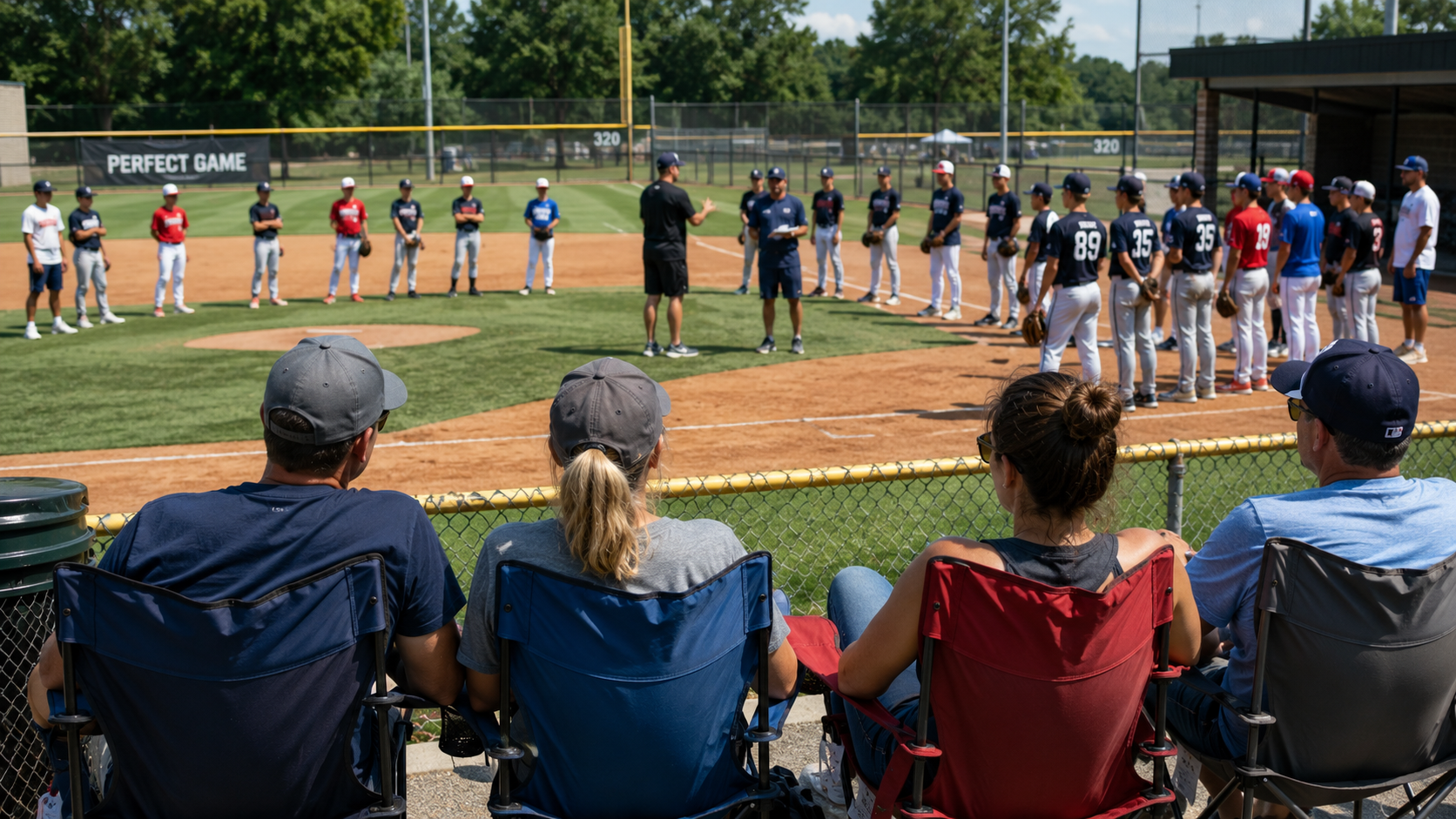
Tryout season is one of the most exciting times of the travel baseball year. Players are eager to compete for a roster spot, coaches are searching for athletes who fit their team, and parents are hoping to find a program that will help their child grow both on and off the field.
It is easy to become focused on every throw, swing, and sprint, but parents should remember that tryouts are a two-way evaluation. While coaches are assessing players, families should also be evaluating the coaching staff, the organization, and the overall experience. A travel baseball team is more than a collection of talented athletes. It is a commitment that involves significant time, money, and trust. Parents should feel confident that the program they choose is the right environment for their athlete.
Here are several important things every parent should watch during a baseball tryout.
What Skills Are Being Tested?
A quality tryout should evaluate players in every major aspect of the game instead of focusing on just one or two skills. The goal is to identify well-rounded athletes while also recognizing players who have the potential to continue developing over time.
Most organized tryouts include defensive drills, throwing evaluations, hitting sessions, base running, and position-specific instruction. Infielders should have opportunities to field routine and challenging ground balls, while outfielders should demonstrate their ability to track fly balls, take proper routes, and make accurate throws. Hitters should receive enough swings to show both consistency and power, and pitchers should have opportunities to demonstrate mechanics, command, velocity, and composure. Catchers should be evaluated on receiving, blocking, footwork, throwing accuracy, and communication.
Parents should also pay attention to whether coaches are evaluating baseball fundamentals in addition to athletic ability. Hustle, communication, awareness, proper footwork, decision-making, and baseball IQ often separate players who consistently contribute from those who rely solely on physical tools. Strong coaches recognize that fundamentals can win games just as often as raw talent.
Are Players Given a Fair Opportunity to Showcase Their Skills?
Every player deserves a meaningful opportunity to demonstrate their abilities. Tryouts can be stressful, and even experienced athletes can make mistakes because of nerves or unfamiliar surroundings. One bad swing or one missed ground ball should never define an entire evaluation.
Parents should observe whether players receive multiple repetitions during each drill. Several opportunities allow coaches to see how players respond after making mistakes and whether they can make adjustments throughout the workout. A player who struggles during the first few minutes may settle in and perform exceptionally well later in the session.
Fair evaluations also require equal opportunities. While larger tryouts naturally present logistical challenges, every participant should receive similar chances to hit, throw, field, run, or pitch. Long periods of standing in line while only a handful of players receive extended evaluations can prevent coaches from accurately assessing the entire group. A well-designed tryout minimizes downtime and maximizes opportunities for every participant.
Are the Coaches Paying Attention?
Parents should watch the evaluators just as carefully as they watch their own child. A coaching staff that remains engaged throughout the tryout demonstrates that it values the evaluation process and respects the effort every player is making.
Good evaluators constantly move around the field, take notes, communicate with one another, and carefully observe each drill. They watch every repetition with purpose because valuable information can come from routine plays just as easily as spectacular ones. Coaches should be paying attention to mechanics, effort, communication, reactions after mistakes, leadership qualities, and overall athleticism.
If coaches spend significant portions of the tryout distracted by conversations, phones, or activities unrelated to the evaluation, parents should take notice. Every player deserves an attentive audience when attempting to earn a roster spot. A focused coaching staff is far more likely to make thoughtful decisions and identify players whose strengths may not immediately stand out.
Observe the Coaches’ Attitude and Approach
The way coaches interact with players during tryouts often reveals what the season will look like. Talent is important, but coaching style has a tremendous impact on player development, confidence, and enjoyment of the game.
Parents should pay attention to whether coaches communicate respectfully and professionally throughout the event. Positive coaching does not mean avoiding accountability. The best coaches challenge players while also creating an environment where athletes feel comfortable competing and learning. Constructive instruction, encouragement, and clear expectations help players perform at their highest level without unnecessary fear or pressure.
Mistakes are inevitable during any tryout, so observing how coaches respond to those moments can be especially revealing. Coaches who remain patient and supportive often create healthier learning environments than those who react with frustration or criticism. Athletes develop best when they are encouraged to learn from mistakes rather than fear making them.
Parents should also notice whether coaches appear genuinely interested in teaching the game. Programs committed to player development often invest time in explaining drills, demonstrating techniques, and offering helpful feedback. Coaches who enjoy teaching typically build stronger teams over the long term because players continue improving throughout the season.
Is the Tryout Organized?
Organization says a great deal about a program. A well-run tryout reflects preparation, planning, and attention to detail. Those same qualities often carry over into practices, tournaments, and communication throughout the season.
The tryout should begin on time, follow a logical schedule, and move efficiently from one activity to the next. Players should know where to report, coaches should understand their assignments, and drills should transition smoothly without unnecessary delays. Equipment should already be in place, and instructions should be clear before each activity begins.
Parents should also watch how the staff handles unexpected situations. Weather delays, equipment issues, or schedule adjustments can happen during any event. Strong organizations adapt calmly, communicate clearly, and keep the tryout moving without creating confusion.
Safety is another important part of organization. Pitchers should have adequate time to warm up before throwing at full effort. Throwing distances should match the players’ age level, and drills should be designed to reduce unnecessary risks. Programs that prioritize organization usually place equal importance on player safety and development.
Is Communication Clear?
Clear communication is one of the strongest indicators of a quality organization. Families should understand how the tryout will be conducted, what skills are being evaluated, when roster decisions will be announced, and what the next steps will be following the event.
Some organizations also use tryouts as an opportunity to explain their philosophy, practice expectations, tournament schedule, player development plans, and overall goals for the season. Providing this information helps families determine whether the program aligns with what they are seeking.
Transparency builds trust. If roster spots are limited, positions are already partially filled, or additional evaluations will be required, coaches should communicate those details honestly whenever possible. Parents appreciate straightforward communication, even when the information may not be exactly what they hoped to hear.
Watch the Current Players
One of the best ways to evaluate a program is by observing the athletes who are already part of it. Returning players often provide a glimpse into the team’s culture, expectations, and coaching philosophy.
Parents should watch how current players interact with teammates, coaches, and prospective players. Positive body language, encouragement, hustle, and respect usually reflect a healthy team environment. Athletes who appear engaged, enthusiastic, and supportive often indicate that they enjoy being part of the program.
Conversely, if returning players seem disengaged, disrespectful, or disconnected from the coaching staff, families should consider what that might suggest about the team’s culture. Team chemistry is built over time, and the behavior of current players frequently reflects the leadership they receive.
Evaluate the Overall Experience
Parents should leave a tryout asking more than whether their child performed well enough to make the team. The larger question is whether the organization appears to be the right place for long-term development and enjoyment of the game.
A successful program is built on fairness, preparation, communication, and quality coaching. It creates opportunities for players to improve their skills while also building confidence, sportsmanship, and a love for baseball. Championships and tournament trophies are exciting, but they should never come at the expense of player development or positive experiences.
Choosing a travel baseball team is one of the most important decisions a family will make during the season. By paying close attention to how the tryout is organized, how coaches interact with players, whether evaluations are conducted fairly, and how clearly the organization communicates, parents can make a more informed decision about where their athlete will have the best opportunity to succeed.
The right program is not simply the one that offers a roster spot. It is the one that demonstrates professionalism, values development, treats every player with respect, and creates an environment where athletes can continue growing both on and off the baseball field.