
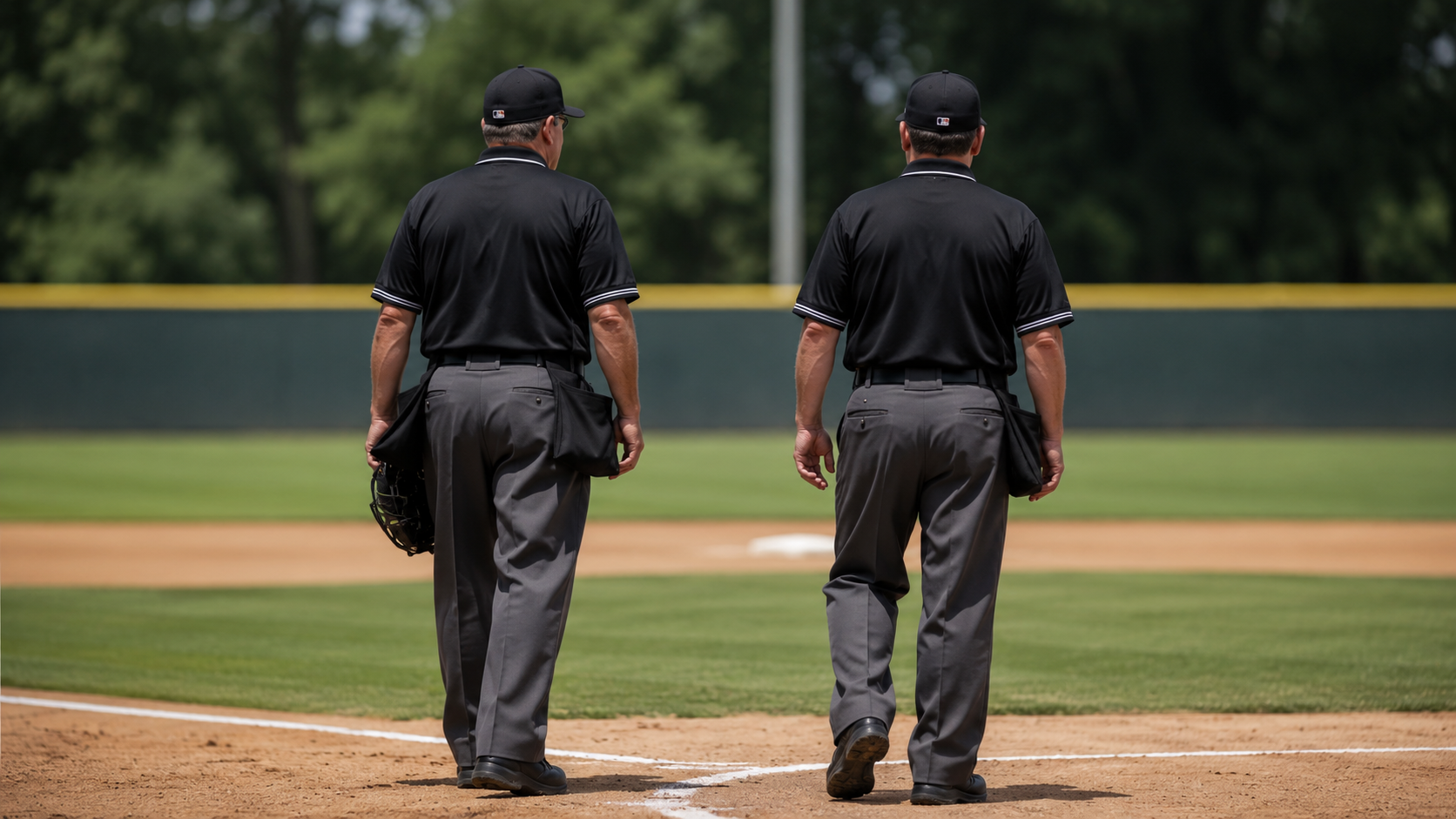
The Game Changes at 13U
Youth baseball changes dramatically once players reach the 13U level. For many organizations, 13U is the first year players transition to the intermediate-sized diamond with 80-foot base paths and a 54-foot pitching distance. Then at 14U, players move again to the full-size 90/60 field used in high school, college and professional baseball.
These are not small adjustments. The game becomes significantly faster, more competitive and much more demanding for players, coaches and umpires. The larger field creates more ground to cover, quicker decisions and more advanced baseball situations. Because of this, having two umpires should be viewed as a necessity rather than a luxury.
At younger levels, one umpire can often manage a game effectively because the smaller field keeps the action compact. Once players move to 13U and older baseball, however, one umpire is expected to cover too much territory and too many responsibilities to consistently officiate the game at the highest level possible.
13U Baseball Is a Major Transition
The move to 80/54 baseball at 13U creates a completely different style of play compared to smaller youth fields. Runners become more aggressive because of the larger base paths. Pitchers throw harder from a greater distance. Middle infielders cover more ground and outfielders must make longer throws.
The speed of the game immediately increases.
Simple plays that were easy to manage on a smaller field suddenly become much more difficult for a solo umpire. A steal at second base, followed by a throw to third, can happen in seconds. Rundowns become longer and more complex. Balls hit to the outfield create difficult catch/no-catch situations that require proper angles and positioning.
One umpire simply cannot be everywhere at once.
A two-man crew allows one umpire to remain focused on the batter, pitcher and plate responsibilities while the second umpire properly covers the bases and the developing action around the field.
14U Becomes Full-Size Baseball
At 14U, the game moves to the full-size 90-foot diamond with a 60-foot, 6-inch pitching distance. This is one of the biggest jumps players make in youth baseball.
Everything becomes faster and more advanced. Pitchers throw with more velocity. Runners get bigger leads and steal more aggressively. Defensive players must make longer throws and cover larger areas of the field. Balls are hit harder and farther.
At this level, the game begins to resemble high school baseball.
Trying to officiate a full-size baseball game with only one umpire creates significant limitations. A solo umpire must call balls and strikes, monitor runners, watch for balks, rule on fair/foul balls and hustle into position for every play at the bases. That is an enormous workload for one person.
Two umpires create proper baseball mechanics and coverage. The plate umpire can focus on the strike zone, game management and plays at home while the base umpire positions themselves for force plays, tag plays, steals, appeals and outfield coverage.
This creates a more professional and consistent game environment for everyone involved.
Better Positioning Leads to Better Calls
Baseball officiating is all about angles and positioning. The closer an umpire is to the correct angle on a play, the greater the chance they will make the correct call.
With only one umpire, many plays are viewed from poor angles or from too far away. This can lead to missed calls, delayed calls or uncertainty.
Two umpires dramatically improve coverage on:
- Plays at first base
- Steals and pickoff attempts
- Tag plays
- Rundowns
- Force plays
- Appeals
- Catch/no-catch situations
- Obstruction and interference calls
- Fair/foul decisions in the outfield
At 13U and older, games become increasingly competitive. Tournament championships, league standings and showcase opportunities are often on the line. Players and coaches deserve officiating that matches the level of competition being played.
No umpire is perfect, but having two umpires significantly increases the chances of getting calls correct.
Safety Is a Major Factor
Player safety is another important reason why two umpires are necessary at 13U and older.
As players mature physically, the game becomes more aggressive and more physical. Hard slides, collisions at home plate and dangerous plays around the bases occur more frequently. Pitchers throw harder and batted balls travel faster than ever before.
A second umpire provides another set of eyes on the field to help monitor dangerous situations and unsportsmanlike behavior.
For example, while the plate umpire watches a play developing at home plate, the base umpire may be observing malicious contact, obstruction or interference away from the ball. Without that second official, important safety issues can easily be missed.
Two umpires also help maintain better control of emotionally charged games. Competitive baseball can create frustration and tension among players, coaches and fans. A two-man crew creates stronger communication, greater professionalism and improved game management.
Advanced Rules Require Advanced Coverage
At 13U and older, the rules and situations within the game also become more advanced.
Umpires are now required to properly handle:
- Balks
- Timing plays
- Appeals
- Infield fly situations
- Obstruction
- Interference
- Dead-ball situations
- Substitutions and lineup management
- Multiple-runner situations
These situations are difficult enough with two umpires. Expecting one umpire to monitor every runner, every base and every rule interpretation at the same time is extremely challenging.
Two-man mechanics are the standard throughout high school and upper-level travel baseball for a reason. The game becomes too complex for one umpire to consistently manage effectively.
Players Deserve a Quality Baseball Experience
At the end of the day, youth baseball should provide players with a safe, fair and positive experience. As the athletes improve, the officiating should improve as well.
Players spend countless hours practicing, training and preparing for games. Families invest significant time and money into travel baseball and tournament participation. Coaches dedicate themselves to developing their teams and players.
Those players deserve proper game coverage.
While many solo umpires work extremely hard and do their best, the reality is simple: 13U and older baseball moves too fast and covers too much ground for one person to consistently officiate every situation correctly.
Two umpires improve:
- Accuracy
- Positioning
- Player safety
- Game control
- Professionalism
- Overall game quality
As baseball transitions to 80/54 at 13U and full-size 90/60 at 14U, the expectations and standards of officiating should rise with it. Two umpires are not just beneficial — they are an important part of creating the best possible baseball experience for everyone involved.